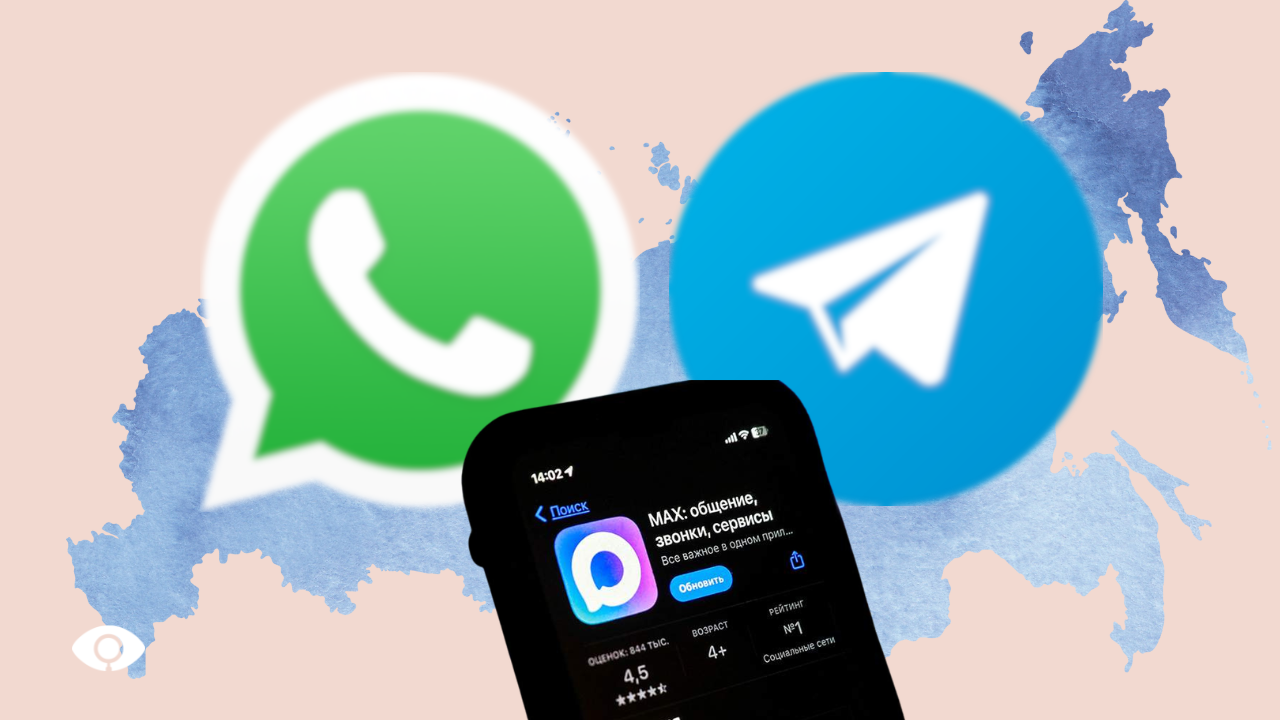
Russia has escalated its crackdown on foreign messaging apps by ordering a full block on WhatsApp and throttling Telegram, aiming to push users toward its state-backed alternative, Max, BBC has reported.
Authorities claim WhatsApp and Telegram violate Russian laws by failing to store user data locally, resisting cooperation with law enforcement on fraud and terrorism cases, and enabling scams that defraud citizens.
Reports suggest that the monthly user numbers of WhatsApp and Telegram are estimated to be 97 and 90 million respectively — in a country of 143 million people.
Dmitry Peskov, the Press Secretary of the President of the Russian Federation, told the BBC that the decision had been made “due to [Meta’s] unwillingness to comply with the norms and the letter of Russian law”, it has been reported. He remarked that Meta can resume operations if it complies with the law and enters into dialogue.
In its statement on X, WhatsApp said that “trying to isolate over 100 million users from private and secure communication is a backwards step and can only lead to less safety for people in Russia. We continue to do everything we can to keep users connected.”
In 2022, the Russian authorities had added Meta, the parent company of Facebook and Intagram, to its list of terrorist and extremist organisations and the two platforms were banned — and remained accessible through virtual private networks (VPNs). It followed Meta’s announcement it would permit posts such as “death to Russian invaders” but not credible threats against civilians. Meta had even appealed against the ban but a Moscow court had upheld it. The ban did not apply to WhatsApp, which Meta also owns.
It has, however, been reported that Roskomnadzor, the Russian communications watchdog, began restricting WhatsApp calls in August 2025 and Telegram access earlier this week, leading to sluggish performance and failed voice features.
A digital rights project Na Svyazi (In Touch) has reported that Russia has increasingly been removing websites from the state-run internet address directory, which is controlled by Roskomnadzor. Once an entry is removed, the site will not open for citizens without a VPN. According to Na Svyazi, 13 popular resources were now missing from the National System of Domain Names (NSDI), including YouTube, Facebook, WhatsApp web, Instagram, the BBC and Deutsche Welle.
Russia’s Super App
In response to the ban of messaging apps, Russia has been promoting its super app called Max. The app has been developed by VK, the country’s largest social network, which is controlled by Gazprom and billionaire Yuri Kovalchuk, a close Putin ally.
Pop stars such as Instasamka and Valya Karnaval, along with bloggers and comedian Denis Dorokhov, promote Max via advertisements on billboards and television. Since September 1, 2025, all smartphones, tablets, and smart TVs sold in Russia must pre-install Max, RuStore, and Lime TV, enforced by government decree.
Mirroring China’s WeChat, it combines messaging, video calls, payments via Russia’s Faster Payment System, e-commerce, government services (Gosuslugi for ID verification and digital signatures), document signing, channels, mini-apps, and AI via GigaChat.
Its policy allows sharing data with third parties and authorities, raising surveillance fears in a context of prosecutions for private messages and rampant data leaks fueling scams. Despite claims of fewer permissions than rivals, critics warn it enables state monitoring.