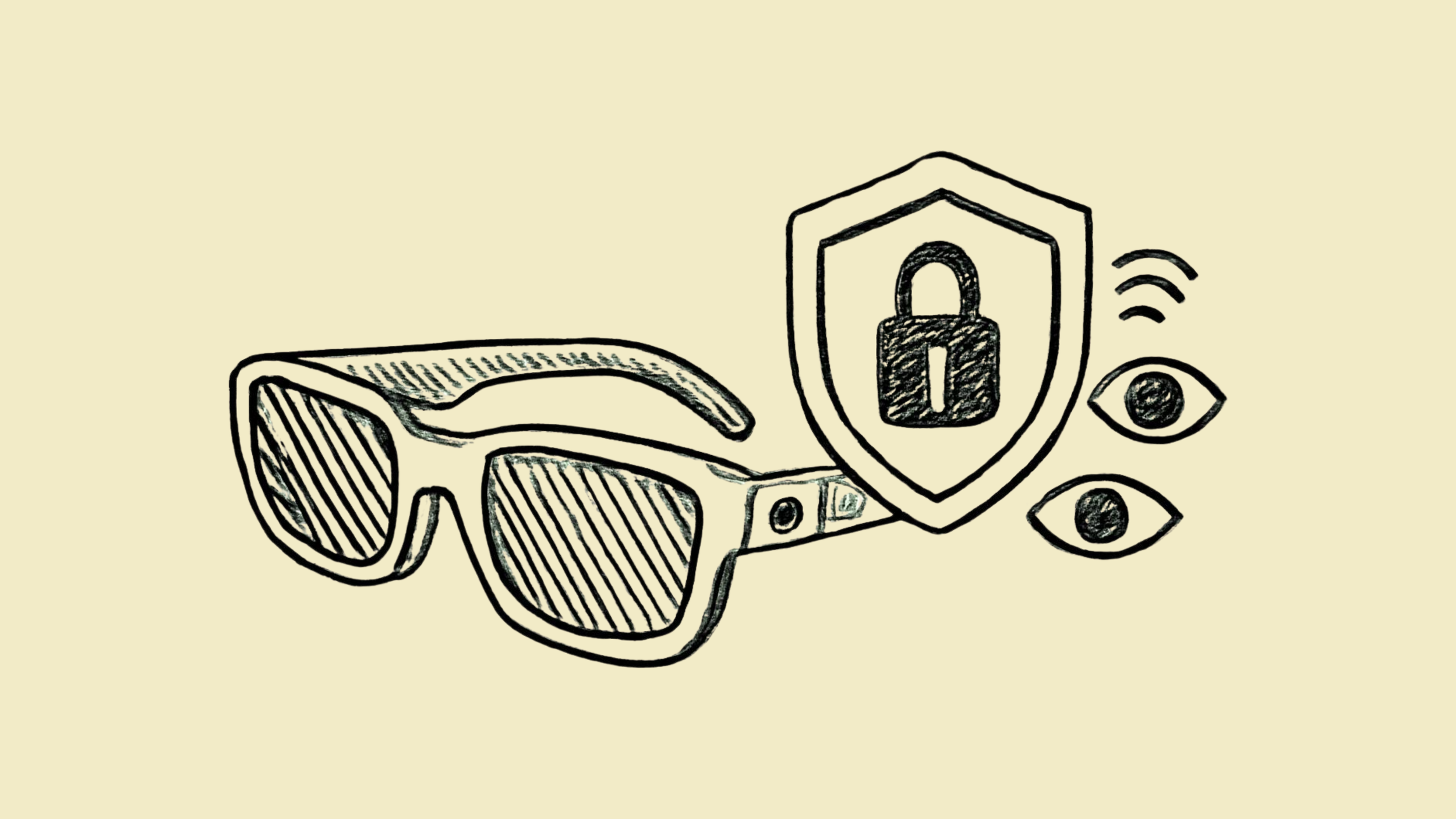
During a routine shopping trip, I found myself standing in the checkout line just a few steps behind a person wearing a pair of bold black glasses that looked oddly familiar. I caught myself staring a little longer than would normally be polite, trying to recall where I had seen them before. At one point, we made eye contact and they quickly looked away, but I was still staring, searching for the details. Then I noticed the small circular lenses in the corners of the frame, and immediately recalled what I was looking at. They were the notorious Meta Ray-Ban smart glasses, equipped with voice-activated cameras capable of recording the surroundings from the wearer’s point of view. The realisation made me feel two conflicting reactions. There was a familiar discomfort at seeing a wearable surveillance device in an ordinary public setting, but also a professional curiosity about how quickly such technologies were becoming normalised.
Across the world, wearables have evolved beyond devices of convenience to become symbols of social status, fashion, lifestyle, and technological sophistication. Pakistan is no exception where despite masses generally being price sensitive, smart watches and smart glasses have found a growing market, valued more for their aesthetic appeal than for their supposed functionality. So conversations about these devices rarely extend beyond their features and fashion value, and far less attention is paid to what they mean for privacy, consent, and the constant collection of data in the spaces we navigate every day. That lack of concern is precisely why I have chosen not to own one. My hesitation is not only about protecting my own privacy, but also about respecting the privacy of everyone around me who has not chosen to be part of a wearable surveillance ecosystem.
But the same considerations are not afforded to the rest of the population in the country where people, including content creators, are increasingly turning to Meta smart glasses as a way to stand out in an oversaturated attention economy. Men wearing the glasses record their daily lives from a first-person perspective, taking viewers through the streets, capturing familiar landmarks, documenting encounters with strangers, and sometimes filming street altercations that end up becoming entertainment for online audiences. The technology is being embraced as a tool for visibility and growth by offering creators a way to produce content that feels authentic.
The risks associated with this discreetness are not distributed equally. In a society where technology-facilitated gender-based violence is an increasingly visible extension of offline violence, the non-consensual creation and circulation of images has emerged as a powerful tool of abuse.
Two patterns stand out in this emerging trend. The first is who appears to be wearing these devices. Most publicly visible adopters are men. Where women are using the glasses, they are more often seen recording in private or controlled environments rather than on public streets. The second is the ease with which these devices record people who may have no idea they are being filmed. Passersby, shopkeepers, vendors, and bystanders become part of a recording without being asked for consent or even being aware that they are being recorded. Unlike a phone held up to capture video that immediately indicates filming, smart glasses blend into the environment seamlessly without the wearer ever lifting their finger to press a button or adjust the frame. The small indicator light on these glasses designed to signal recording can be difficult to notice, particularly outdoors in bright daylight, making it easy for filming to become invisible to those being recorded.
And the risks associated with this discreetness are not distributed equally. In a society where technology-facilitated gender-based violence is an increasingly visible extension of offline violence, the non-consensual creation and circulation of images has emerged as a powerful tool of abuse. For many women, harm does not begin with an intimate image, but in fact, an ordinary photograph or video taken without consent can be stripped of its original context, manipulated, weaponised, or used as proof of a woman’s presence in a place where others believe she should not have been. The consequences can extend far beyond the digital sphere, leading to harassment, blackmail, restrictions on mobility, forced withdrawal from education or employment, family violence, and lasting damage to a woman’s sense of safety and autonomy.
Pakistan has repeatedly witnessed incidents involving hidden cameras placed in spaces or an individual non-consensually recording where women reasonably expected privacy, including educational institutions and washrooms, with the resulting recordings used to harass, extort and shame those targeted. In 2024, a girl in Lahore complained about being recorded by a man from the building across the street while she was in the washroom at the hostel she was staying in. In 2017, Naila Rind, a student at the University of Jamshoro, died by suicide after consistently being harassed and blackmailed by a man who had recordings of her and at least 30 other women at the university, including those recorded in the washroom. These are not isolated incidents, instead are the reality of many women in Pakistan who fear being recorded in spaces that are supposed to be private and safe.
Smart glasses make such surveillance even harder to detect as they blend into everyday interactions, leaving people with little indication that they are being filmed at all. As these devices become more commercially available, the risk is no longer confined to hidden cameras or mobile phones. Instead, this surveillance is becoming portable, socially acceptable, and capable of entering virtually any space through anyone who can afford to wear it. By the time a woman discovers she has been recorded, the footage may already have been copied, uploaded, shared or transformed into another form of image-based abuse.
Privacy in Pakistan
The idea of privacy in Pakistan has always been contested. A common argument still persists in many spaces that you don’t need privacy if you have nothing to hide. While this belief is less dominant among younger generations now, many of whom increasingly assert the right to privacy, it continues to shape everyday attitudes in homes, neighbourhoods, and institutions.
What smart glasses and similar wearables introduce is an upgrade of the local culture of scrutiny. The same gaze that once belonged to an intrusive individual in the neighbourhood keeping tabs on when the girl next door is coming home, can now be worn and pointed with far greater range and far less effort.
In practice, privacy – digital or offline – is often negotiated within very narrow limits, like parents discouraging or outright preventing children from closing their bedroom doors. Or a phone password can become a source of suspicion, and read as evidence of secrecy rather than a basic security measure. In many social settings, particularly among older generations, digital and physical boundaries are frequently interpreted through the lens of moral scrutiny.
This culture of scrutiny has also shaped how many young Pakistanis navigate social media. The rise of “alt accounts” or secondary profiles became an attempt for them to create digital spaces away from judgment. Often shared only with a carefully chosen circle of trusted friends, these accounts allow for a degree of self-expression that they consider unsafe for a primary profile where everyone else is also watching. The popularity of these parallel identities are an indication of interest in privacy and safe spaces where social interaction is not constantly subject to surveillance or moral policing.
So where privacy has never been a fully realised or evenly distributed right, surveillance in this context is not only technological or state-driven, but also social and embedded in everyday life. Most often than not, the scrutiny is afforded to women more than to men which is also shaped by culture, family structures, social expectations, and norms of respectability.
Surveillance is a predictable and common aspect of occupying public spaces in Pakistan. What changes now is that with technological advancement, this surveillance and blatant breach of privacy is recorded and archived for memory for longer in databases and servers.
What smart glasses and similar wearables introduce is an upgrade of the local culture of scrutiny. The same gaze that once belonged to an intrusive individual in the neighbourhood keeping tabs on when the girl next door is coming home, can now be worn and pointed with far greater range and far less effort. A content creator filming “content” on a street can record a woman he does not know while just walking across her, without her knowledge or consent, and that footage does not stay within a household’s informal economy of gossip and judgment. It is stored and potentially run through systems designed to recognise faces and track patterns across millions of other recordings.
The question is not whether surveillance exists, but instead how frequently it accompanies us into spaces that were once assumed to be private. In such an environment, assuming that we are never being recorded or watched is becoming increasingly difficult.
In 2012, reports emerged from Kohistan alleging that four women had been killed in the name of so-called honour after a video of them clapping and singing while two men danced at a wedding gathering circulated within the community. What had begun as a celebration became the basis for tribal reprisals against the women, whose only known act was attending and participating in the festivities. The case remains a stark reminder that, in contexts where women’s visibility is tightly controlled, the circulation of an ordinary video can have life-threatening consequences.
The Infrastructure of Surveillance
The Meta smart glasses – developed in partnership with Ray-Ban and Oakley – are an extension of this wearable surveillance panopticon being built, and the clearest evidence of where it is headed can be seen Meta’s own internal records. In February 2026, the New York Times reported on an internal Meta document describing that the company would incorporate a facial recognition feature in the glasses, internally called “Name Tag,” that would let a wearer point the device at a stranger and have Meta’s AI reveal that person’s identity. The same document reportedly described the planned advantageous launch window around political tumult in the US because civil society groups would have their resources focused on other concerns at the time. In June 2026, WIRED confirmed that the facial recognition feature was not theoretical, rather it had already shipped – though not yet enabled – to the Meta AI companion app that is downloaded over 50 million times. Meta removed the code the same month after civil rights and privacy organisations objected, but offered no public explanation and gave no commitment that the feature, or one like it, would not return.
In addition, earlier this year, investigations revealed that data annotators in Kenya were being tasked with reviewing and labelling highly intimate footage captured through Meta smart glasses to train the company’s AI systems. The material reportedly included people changing clothes, using the toilet, reviewing financial information, and carrying out other very personal activities inside spaces they believed to be private. These recordings were transmitted through Meta’s systems to workers thousands of kilometres away to train the company’s AI models, often without the knowledge of everyone appearing in the footage.
The revelations raise serious questions about the promises of privacy and user control that Meta has repeatedly offered to users and regulators. They also suggest how easily an everyday recording can become part of a global AI data supply chain where personal data is used not only to develop commercial AI products, but also to train systems that may ultimately be deployed in policing, military and other security contexts with far greater potential for harm.
For years, surveillance was commonly understood as something carried out by governments, intelligence agencies or law enforcement, usually directed at journalists, activists or political opponents. Wearable technologies are expanding that landscape as surveillance is now becoming embedded in ordinary social interactions, carried by consumers rather than only state actors, and normalised through products marketed as lifestyle and fashion accessories. The question is not whether surveillance exists, but instead how frequently it accompanies us into spaces that were once assumed to be private. In such an environment, assuming that we are never being recorded or watched is becoming increasingly difficult.
Meta is not operating in isolation, and these incidents are not exceptional. Similar concerns have emerged across the broader ecosystem of connected devices and home surveillance technologies. In earlier cases, Amazon employees were reported to have accessed footage from home security cameras to view customer recordings, raising questions about internal access controls and oversight. Security researchers and media reports have also documented vulnerabilities in internet-connected camera systems that were exploited by hackers, including instances where footage from private homes was accessed without authorisation, with children among those affected.
Rights groups have repeatedly warned that smart devices can capture sensitive data, including voices and behavioural patterns, and store or process it in ways that are not always transparent to users. These concerns are part of a broader structural issue – once surveillance capabilities are embedded into everyday objects, the limitations around who can access that data, and for what purpose, become increasingly difficult to maintain.
History also shows that surveillance systems rarely remain confined to their stated purpose. In the United States, investigations have found police officers misusing access to Flock’s automated licence plate reader system to locate current and former romantic partners, family members and acquaintances, despite the technology being marketed for crime prevention. Similar abuses have surfaced elsewhere. In Canada, police officers have been disciplined for using vehicle registration databases to obtain women’s personal information for reasons unrelated to policing. Reports have also alleged that employees linked to the NSO Group exploited access to Pegasus spyware to surveil intimate partners, demonstrating how technologies developed and sold in the name of security can be redirected towards deeply personal forms of control. These incidents are not anomalies but recurring reminders that surveillance technologies are shaped by the power structures in which they operate.
Rights groups have repeatedly warned that smart devices can capture sensitive data, including voices and behavioural patterns, and store or process it in ways that are not always transparent to users. These concerns are part of a broader structural issue – once surveillance capabilities are embedded into everyday objects, the limitations around who can access that data, and for what purpose, become increasingly difficult to maintain.
As digital technologies become increasingly integrated into militarised infrastructures, including systems of facial recognition and autonomous targeting, the movement of these tools across contexts requires closer scrutiny. It is widely documented how surveillance technologies and AI-enabled systems are deployed in contexts of illegal occupation and genocide in Palestine and Lebanon, raising concerns about discrimination, accountability, and civilian protection.
As wearable devices generate increasingly granular data about people’s movements, routines and associations, the question is not only who collects that information, but who may eventually gain access to it, under what authority, and with what safeguards. For women already navigating stalking, coercive control, and technology-facilitated abuse, the expansion of such surveillance ecosystems introduces new opportunities for monitoring that extend well beyond the intentions under which these devices were originally marketed.
The Trajectory of Surveillance
The commercialisation of smart devices, from home appliances to wearables, is often presented as a natural trajectory of technological progress, especially in an era that once promised flying cars but delivered connected homes and always-on tracking. But this framing obscures an important question about what happens to the vast quantities of personalised surveillance data these systems generate, particularly for individuals who are never really aware of when, how, or by whom they are being watched.
As digital technologies become increasingly integrated into militarised infrastructures, including systems of facial recognition and autonomous targeting, the movement of these tools across contexts requires closer scrutiny. These technologies are developed and refined for use in conflict and occupation settings, where surveillance and identification systems play a direct role in enabling harm. It is widely documented how surveillance technologies and AI-enabled systems are deployed in contexts of illegal occupation and genocide in Palestine and Lebanon, raising concerns about discrimination, accountability, and civilian protection.
Once normalised in these settings, these systems rarely remain contained there – as also being witnessed across the world where technology of apartheid is being marketed to global buyers as “battle-tested”. They are then adapted for use in politically volatile environments where surveillance becomes a tool for controlling dissent, monitoring journalists, and targeting activists, opposition voices and human rights defenders who challenge dominant state narratives. In such contexts, the burden of surveillance falls most heavily on those already experiencing structural oppression, including women, gender minorities, and communities resisting patriarchal and authoritarian control.
In Pakistan, it is not difficult to imagine how AI-enabled technologies, whether military-grade or commercially developed, could facilitate violence against people across different walks of life. An ethnic minority demanding equal rights, a religious minority seeking justice for recurring violence, a journalist investigating human rights abuses, an activist amplifying silenced voices, or a lawyer defending those unjustly accused all become more vulnerable when surveillance technologies make them easier to identify, locate and monitor. We can all think of someone who occupies one of these identities and could face authoritarian reprisals because a smart wearable happened to record their presence.
The data collected through smart devices and systems (think: Safe City projects) feeds directly into this expanding surveillance infrastructure, becoming part of the supply chain of datasets used to train and refine systems designed for identification and tracking. As these systems are optimised, the emphasis shifts towards increasing precision in recognising and categorising individuals across different contexts, identities, environments and behaviours.
This drive towards accuracy in identifying subjects is shaped by the logics of control embedded within surveillance systems themselves, where the ability to consistently identify and track individuals becomes central to how power is exercised. Historical patterns of misidentification, particularly of people of colour, women and other marginalised communities, are often framed as technical limitations to be corrected. But the correction itself is guided by the demand for systems that can reliably and accurately read and classify precisely those bodies that have been most frequently subjected to oppression, surveillance, and policing.
In this way, the question is not only whether these systems work, but for whom they are being made to work, and to what end. I have previously argued that technology companies are the next generation of military contractors, as modern warfare increasingly relies on advanced digital technologies to develop and operationalise military systems for wars, conflicts, and genocides. In this sense, the refinement of identification technologies is inseparable from the broader infrastructures of governance, security and control into which they are embedded.
In Pakistan, it is not difficult to imagine how AI-enabled technologies, whether military-grade or commercially developed, could facilitate violence against people across different walks of life. An ethnic minority demanding equal rights, a religious minority seeking justice for recurring violence, a journalist investigating human rights abuses, an activist amplifying silenced voices, or a lawyer defending those unjustly accused all become more vulnerable when surveillance technologies make them easier to identify, locate and monitor. We can all think of someone who occupies one of these identities and could face authoritarian reprisals because a smart wearable happened to record their presence.
This is not merely a speculative risk, it instead reflects an existing reality in which visibility itself is unevenly governed, and where digital circulation of images and videos can intensify patterns of control and harm. When surveillance is embedded into everyday consumer technologies and rendered increasingly invisible, it produces conditions in which civil liberties are further restricted in both public and private spaces. The normalisation of these systems – a surveillance device on your face – places a disproportionate burden on those who are already required to constantly negotiate their right to exist, right to privacy, right to move and be seen on unequal terms.