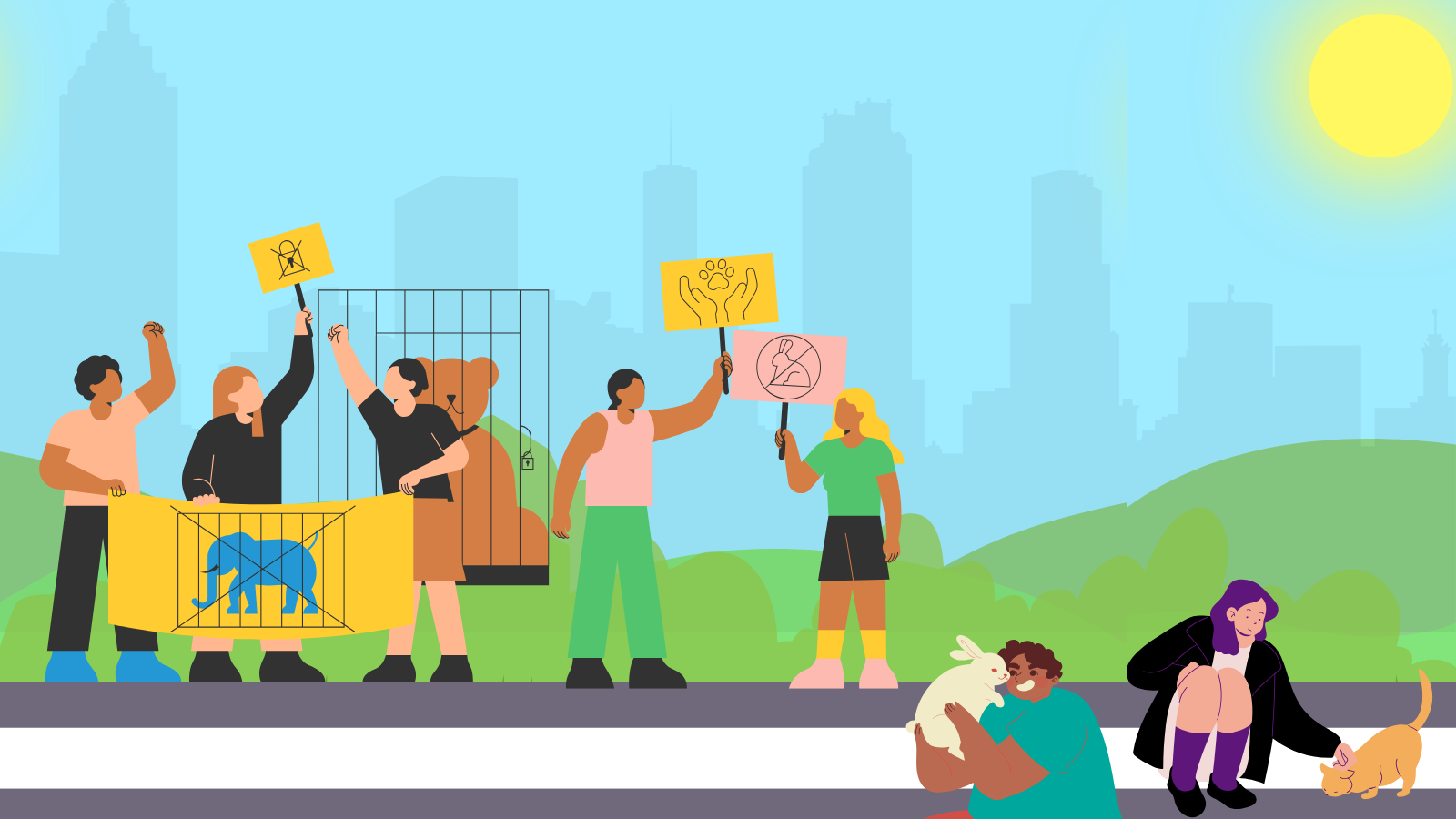
In Pakistan, the battle for animal rights is not being fought in courtrooms, government departments, or veterinary hospitals but on timelines; through Facebook live videos outside demolished pet markets in Lahore; on TikToks showing trembling donkeys collapsing under unbearable loads; on Instagram stories where volunteers beg strangers to donate for a dog burned with boiling water; on X threads demanding justice for puppies whose ears were slashed off by neighborhood boys in Peshawar. And more than anything else, it is fought in the comment sections.
Pakistan’s animal-welfare crisis is not new. But what is new is the scale, force, and speed with which ordinary citizens have turned digital platforms into a grassroots enforcement mechanism – a parallel justice system replacing a state that has chronically failed to protect the most voiceless beings within its borders.
Even this year, social media has carried the entire burden of exposing cruelty, mobilising rescues, holding violators accountable, and pushing authorities into reluctant action. Viral posts have done what laws, policies, and institutions have repeatedly failed to do.
But while online outrage has become Pakistan’s frontline, the system it pressures: the courts, the police, the government departments, the municipal authorities, remains slow, undertrained, and stuck between outdated colonial laws and half-implemented modern reforms.
To understand how gradually and consistently the digital sphere has become the preferred arena for animal rights activists, it’s important to look back at the major cases reported in recent years.
Puppies With Severed Ears in Peshawar
A gang cutting the ears of newborn puppies for profit triggered nationwide outrage after videos circulated online. On February 10, three suspects, identified as Niaz Ali, Imtiaz Ali and Badal, were arrested for the crime.
Two years ago, Dr Ayeza Haider, the Focal Person of the Pakistan Animal Rights Advocacy Group, had approached the district administration of Peshawar to take action against the practice. In the letter to District Director Livestock, Dr Haider shared pictures and footage showing men chopping off the ears and tails of puppies before selling them but to no avail. Action was only taken following public uproar when the new case emerged.
Demolition of Pet Market in Lahore
On November 7, pictures and videos of animals being buried alive went viral after Lahore authorities demolished a bird market in Bhati Chowk.
The story exploded online, forcing authorities to defend themselves. The Lahore Development Authority, which carried out the drive, denied that any animals were harmed but animal welfare organisatios posted videos from the site showing people pulling out animals and their bodies from beneath the rubble.
Many people criticised the LDA for their actions. “Horrified by the actions of the Lahore Development Authority to demolish a pet market with the pets still inside burying many alive under rubble,” tweeted animal rights activist Zulfikar Ali Bhutto Junior. “While Punjab represents itself as pro animal/ wildlife for the sake of COP entry, such actions reveal a cruel side to the city government.”
In response the Lahore High Court on November 10 ordered the Punjab Wildlife Department to submit a detailed report on the demolition within 30 months and formulate a framework for prevention of such incidents in future.
Camel mutilation in Sanghar
In 2024, the story of a camel whose leg was chopped off by a landlord in Sanghar went viral. Details revealed that the landlord mutilated the camel because his owner had entered his fields scavenging for fodder in Mund Jamrao village. Soomer Khan, owner of the camel, while speaking to the media at Sanghar press club said:“I have no enmity with anyone. I don’t know why this was done to my camel.”
Sanghar SSP took notice of the incident after the video of a camel with a chopped leg went viral on social media, and six suspects were arrested and remanded into police custody.
In June this year, it was reported that the camel stood up for the first time with the help of a prosthetic leg. She was then taken in by the Comprehensive Disaster Response Services (CDRS) Benji Project for Animal Welfare in Karachi, and the shelter shared a video of the camel getting used to walking with her leg.
“It’s been a year of tears, setbacks, rehab, pain, and quiet perseverance. A year where we were told to give up, to move on, to stop delaying the inevitable. But we chose to stand by her. And today, she stood for us all,” the organisation wrote in the video’s caption.
TikTok Animal Abuse Case
In July, the Punjab Police arrested a suspect for torturing animals after her videos surfaced on social media. The influencers was seen posting videos of torturing bunnies and cats. It was reported that bodies of animals and blood were found at the suspect’s house.
Weak laws
At the heart of this crisis lies a legal contradiction: Pakistan’s animal protection laws are outdated, inconsistent, and poorly enforced. While Peshawar does not currently have a dedicated ‘animal rights lawyer’, Advocate Yahya Amin Khan has emerged as one of the few legal professionals in the city who has both the knowledge and the willingness to guide cruelty-related cases. His interpretation of the law, the evidentiary challenges, and procedural gaps reveals why most animal cases collapse long before they reach a courtroom
“For most cases, the Prevention of Cruelty to Animals Act 1890 is still cited,” Advocate Khan explains. “That law has penalties as low as Rs50. It was written by the British, and yet our police still use it,” he said, adding that even where amendments exist, enforcement is rare.
Khyber Pakhtunkhwa recently passed the Animal Welfare Act 2024, which modernises penalties (up to three to six months imprisonment and fines of Rs50k to 100k). The transition has, however, been slow, Advocate Khan remarks.“Most FIRs were lodged under the old Act. Policemen and magistrates still rely on it because it’s familiar. Implementation of the new law is happening, but gradually.”
Despite the system’s weaknesses, online evidence, videos, photos, live streams, should be a breakthrough. But Advocate Khan explains the opposite: “Digital content is powerful for public pressure, but difficult to use in court. Judges require proof of authenticity, metadata, chain-of-custody. Without that, videos become awareness tools, not legal evidence.”
Animal cruelty is treated as low-priority, he said. “Charge sheets are weak, investigations incomplete, and prosecutors often handle it as a minor case. The backlog in courts means hearings are delayed for months,” he added.
When asked about Pakistan’s preparedness and legal infrastructure, the KP Government’s official stance provides a rare window into the state’s perspective.
KP Government’s Position as Stated by Special Assistant To Chief Minister for Information and PRs Khyber Pakhtunkhwa Shafi Jan: “Khyber Pakhtunkhwa is the first province in the country to have its Provincial Assembly approve the Animal Welfare Act 2024.”
The government highlights several initiatives such as rules for implementation to be sent to the law department, livestock department designated for all enforcement,
inspectors to be appointed in every tehsil, Animal Welfare Committee to include government and private sector members, and strict punishment promised on any evidence, videos, calls, written complaints.
This is a significant shift on paper. But the gap between policy and practice remains wide. The new Act is a strong foundation, but implementation is still in its infancy.
And meanwhile, cruelty continues to be documented and exposed online daily.
While laws and institutions lag, activists and citizens continue to fill the vacuum.
No one embodies this struggle more than Adeela Haq, founder of The Crazy Cat Project, Lahore. “There aren’t any strict laws for animal abuse. And that is the biggest challenge we face,” she shared.
Her organisation has rescued thousands of animals, almost all through: WhatsApp messages, Facebook tags, Instagram DMs, viral videos and strangers sharing tweets from X. Her shelter runs on donations collected through social media.
“We have become the state, the rescuers, the ambulance, the court, the investigator, everything. If people stop posting online, most animals will never be found,” she said.
This privatisation of public responsibility – citizens paying for what the government should provide, has created an entire economy driven by empathy. The emotional cost is equally heavy: burnout, harassment, lawsuits, threats.
“Sometimes we hesitate to post a case,” Haq said, adding “because we know the backlash, the trolls, the pressure. But if we don’t post, the animal dies.”
Veterinarian Dr. Hafiz Dawar, one of Peshawar’s most recognised animal doctors, offers the clinical side of the crisis, exposing another layer of structural gaps.
“When an abused or injured animal arrives, we test, check up, diagnose, and start treatment.We can usually identify the cause. Burn wounds, electric shocks, cuts – the nature of the wound tells its own story,” he said.
“We maintain a case file for every injured stray animal. There may be protocols, but I haven’t filed or reported any case to authorities. I just treat the rescue cases at my clinic,” the vet explained, revealing that there are no proper protocols in place for vets reporting abuses against animals.
He did, however, recommend that there should be government-allocated rooms for injured animals with staff available 24/7. He said that they keep injured stray cats for adoption, but they can’t do so for dogs because of spacing issues. “We simply don’t have space.”
Dr. Dawar then suggested that awareness on social media is necessary as it has helped him treat many wounded animals. “People know everything through digital media. It will help even more.”
The Sentience Divide
In 2020, the Islamabad High Court announced a groundbreaking verdict and declared animals to be sentient beings with legal rights.
Advocate Khan shared that the ruling is, however, not binding upon KP courts. “It is referenced sometimes, but no documented case shows it has influenced a final judgment.”
While the law recognises sentient beings, the system does not. This leads to frequently reporting and undocumented cases of shooting, poisoning, culling, relocating, mistreatment and confiscation of animals.
The Cultural Pivot
Pakistan has long treated animal welfare as a “side issue” or a “luxury concern.” But the past six months online show a shift: teenagers taking social media to expose animal cruelty, college students running adoption pages on Instagram, X threads show discussions on rescued donkeys, birds, tortoises and cats, and viral outages which push police into action.
The cultural imagination is changing; driven not by state campaigns, but by citizen activism.This is Pakistan’s first grassroots, democratized animal-welfare movement and it is digital.
The precedent set by Kaavan’s case has made way for activists to realise and unleash the potential of digital space for their cause. Kaavan, an Asian elephant at Islamabad zoo, had started suffering from isolation as the zoo was unable to provide for his “physiological, social and behavioural needs” as he remained chained in a small enclosure in isolation since 2012. In 2015, Samar Khan, a student, started an online petition to highlight his plight, she even created a Facebook page sharing the elephant’s story. While speaking to Dialogue Earth,she shared that social media had proven to be a powerful tool. “People held tweetstorms tagging celebrities. We made a template email and had hundreds of people use it to send letters to government officials every day,” she said. Cher, the American pop singer, was among those who joined the campaign, and it was her tweet which brought the case into media light. Cher’s organisation, Free the Wild, even funded Kaavan’s relocation to a sanctuary in Cambodia.
Animal-rights activists point out that while dozens of cruelty cases surface every year, very few lead to legal action. The puppy ear-cropping case in Peshawar in February 2025, where three men were arrested, and the camel-mutilation cases in Sanghar (2024) and Sukkur (2025), where suspects were taken into custody, remain rare examples.
In contrast, most dog-culling incidents rely on court petitions rather than police intervention — which is why the Lahore High Court’s May 2025 ruling banning dog culling became a landmark decision. Even in Islamabad’s alleged mass dog-killing incident in October 2025, it was the courts, not the police, that moved to hold authorities accountable. These cases show the critical role of online campaigns and viral videos in pushing authorities into action.
Pakistan stands at a crossroads. On one side is a broken system; outdated laws, reluctant police, overloaded courts, untrained inspectors, and a lack of shelters.On the other side is a digital army; activists, citizens, rescuers, lawyers, vets, teenagers, influencers, and ordinary people who refuse to look away. Social media did not ask to become the frontline.It became the frontline because nothing else existed.
And until Pakistan bridges the gap between legal rights and lived reality,until courts accept digital evidence, until inspectors are appointed in every tehsil, until vets are integrated into a national welfare system, until activists are protected from harassment, until shelters exist for every abused animal, the fight for animal rights in Pakistan will continue to be waged online.
The animals of Pakistan have no voice. So, the people have become their voice, one viral video at a time.